The president of the FMRM, Víctor Manuel López Abenza, receives the Minister of Education and Vocational Training, Víctor Marín, and the Director General of Educational Centers and Infrastructure

The president of the Federation of Municipalities of the Region of Murcia, Víctor Manuel López Abenza , accompanied by the second vice-president Catalina Herrero, received the Minister of Education and Vocational Training, Víctor Marín , and the general director of Educational Centers and Infrastructure, in a meeting in which the main lines of the climaTIZA Plan and its application in the municipalities of the Region were presented to the Federation.

Also participating in the meeting were the Secretary General of the FMRM, Antonio Moreno , and the Second Vice President of the Federation, Catalina Herrero.

The first phase of the Plan will allow seven million euros to be allocated directly to the municipalities to carry out actions aimed at improving the thermal comfort of public schools, such as the improvement of electrical installations, air conditioning systems, insulation, solar panels, awnings or the creation of shaded areas.

The Regional Ministry will first conduct an audit of the schools' needs, and the local councils will then determine which schools will receive the necessary funding. The grants will be processed before the end of the year so that construction can begin in early 2027.

From the Federation of Municipalities, Víctor Manuel López Abenza has valued the importance of the municipalities being able to participate directly in the improvement of educational infrastructures that are part of the daily life of their municipalities.

“Local councils are very familiar with the needs of their schools, and it is essential that they have the resources to act. The Federation will continue to facilitate coordination between the regional government and the municipalities so that these investments respond to the real needs of each locality.”

The amount allocated to each municipality will take into account the number of classrooms in its public schools and will also include a fixed amount to especially favor smaller municipalities, with a minimum allocation of 25.000 euros per town hall.

The ClimaTIZA Plan has a planned total investment of 89 million euros and aims to progressively improve the thermal conditions and energy efficiency of educational centers in the Region until 2030.

Nature-based solutions and heat adaptation: experiences already being tested in municipalities

During the meeting, the president of the FMRM, Víctor Manuel López Abenza , and the general secretary, Antonio Moreno , also conveyed to the Ministry some experiences that the Federation is developing through European projects and that can provide new solutions to the heat.

One of the examples presented was LIFE GreenMe5 , a project led by the FMRM, which has a pilot action at the Cristo del Consuelo School in Cieza , where a renaturalization of the school playground has been carried out using nature-based solutions aimed at reducing the temperature and improving the comfort of the space.

The Regional Ministry of Education showed interest in this experience and its potential for replication in other educational centers in the Region.

The Federation also has the work developed within the framework of Interreg Euro-MED HEATSAFE , a project led by the FMRM, in which Cartagena serves as a pilot territory. This summer, the FMRM and the Cartagena City Council carried out a heatwave prevention campaign , with awareness-raising activities also targeting the municipality's summer schools.

The project also includes the implementation of a climate shelter in Cartagena , as a pilot project aimed at advancing the adaptation of urban spaces to high temperatures.

These initiatives allow for the complementation of building climate control measures with other measures related to renaturalization, shade, prevention, and urban adaptation to heat.

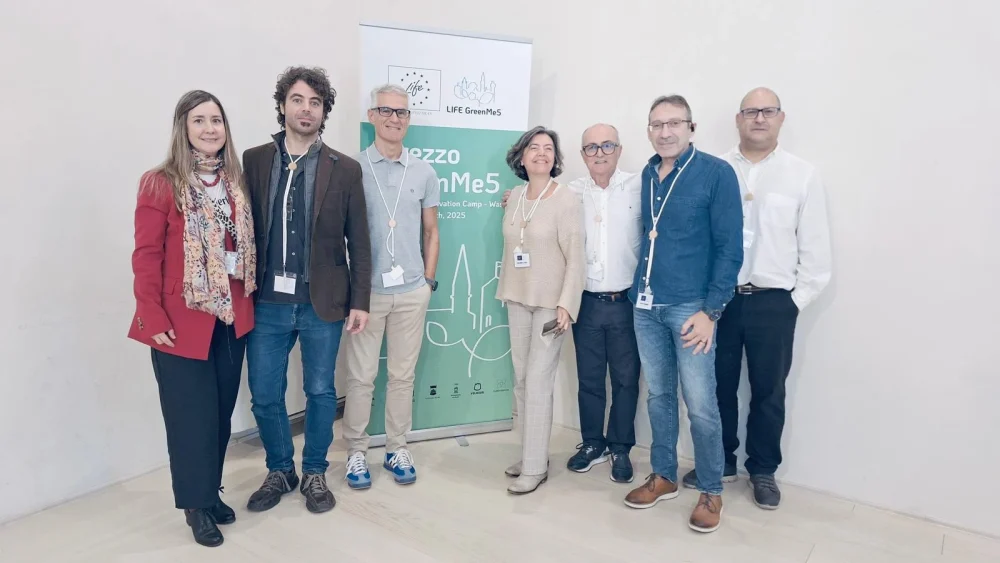
The Federation of Municipalities of the Region of Murcia (FMRM), as the leading partner of the European LIFE GreenMe5 project, has collaborated in the organization of the 5th Green Innovation Camp , held this week in Cieza and focused on the biodiversity pillar within the Green City Accord.

Within the framework of this meeting, the first peer-to-peer event was also held , in which the municipalities of Murcia and Cieza shared with the other partners good practices related to the five pillars of the agreement: air quality, water quality, noise pollution, biodiversity and waste management.

The activities began in the municipality of Murcia with a visit to the Vivillo meander restoration project, where participants learned about the progress of this initiative and its impact on improving riparian ecosystems. Afterwards, they traveled to the Cañada Hermosa plant, where they were shown the waste management and recovery processes.

The day continued in Cieza, where various initiatives related to Sustainable Urban Drainage Systems (SUDS) and nature-based solutions were presented, aimed at improving urban resilience and advancing the tree cover targets established by the Nature Restoration Regulation. Green infrastructure management projects in different areas of the municipality were also showcased, including Camino de Murcia, Calle Esparteros—where the URBACT BiodiverCity project was presented—and the Juan XXIII North and South zones.

The tour ended in the Prince of Asturias Park, where a high water consumption lawn area has been transformed into a butterfly garden, promoting biodiversity and reducing water consumption.

The Green Innovation Camp took place on the 25th , with the participation of municipal technicians, political leaders, and sustainability experts. Among the attendees was Alfonso Alcolea, representative of the European Commission's Directorate-General for the Environment.

The day included a presentation by Gerard Passola, an international expert in arboriculture, as well as presentations from the municipalities of Cieza, Arezzo, Lorquí, and Vilnius, along with organizations such as ANSE, the Segura River Basin Authority, Arbocity, and Singular Green. To conclude, participants visited the pilot project for the renaturalization of the playground at the Cristo del Consuelo Public School, guided by its designer, Paz González, in which the school community also actively participated.

In the institutional sphere, the political reception was attended by Antonio Moreno, Secretary General of the Federation of Municipalities of the Region of Murcia, who accompanied the Mayor of Cieza, thus reinforcing the FMRM's commitment to promoting sustainable local policies and municipal cooperation.

Following the technical sessions, the project partners were able to learn about the historical heritage of the municipality with visits to the Serreta Cave and the Medina Siyâsa archaeological site.

The meeting concluded on the 26th with the Steering Committee Meeting , in which the progress of the different work packages of the project was reviewed.

The FMRM highly values ​​the development of these conferences, highlighting their productive nature and the exchange of experiences between European municipalities, which are fundamental to moving towards more sustainable urban models.

On February 18 and 19, 2026 , GM5 partners hosted a joint visit from the European Commission to several European LIFE projects linked to the New European Bauhaus (NEB) : LIFE BauhausingEurope, LIFE GreenMe5, and LIFE SeedNEB . The meeting provided an opportunity to share progress, methodologies, and results among European partners, as well as to visit several pilot projects in the region.

During these sessions, LIFE GreenMe5 presented its approach to facilitating the implementation of the Green City Accord (GCA) in European cities and showcasing concrete examples of nature-based solutions and participatory governance.

Project presentation and its NEB approach

In this context, the LIFE GreenMe5 team presented:

  • The project objectives, focused on facilitating the implementation of the Green City Accord in municipalities.
  • The working methodology based on multi-level governanceCitizen participation and cooperation between cities.
  • The project's contribution to the principles of the New European Bauhausintegrating sustainability, aesthetics and participation in urban interventions.

Visit to the biodiversity pilot project in Cieza

The first day included a visit to the pilot project for the renaturalization of school playgrounds in Cieza , developed within the framework of the biodiversity pillar of the Green City Accord.

During the visit, the participants were able to learn about:

  • The transformation of the school playground through nature-based solutions.
  • The replacement of impermeable surfaces with systems of sustainable drainage.
  • Activities co-design with the educational community, a key element in the participatory approach of the project.

This pilot project represents a clear example of the connection between LIFE GreenMe5 and the New European Bauhaus , by combining environmental improvement, public space design and school community participation.

Environmental monitoring and local governance

One of the challenges identified by LIFE GreenMe5 is precisely the coordination between different municipal services for the collection of environmental indicators. To address this, the project has promoted multi-level governance structures and local action groups , which involve administrations, universities, associations, and citizens in monitoring the objectives of the GreenMe5 initiative.

Visit to the pilot project for reducing food waste in Murcia

The second day focused on the pilot project developed in Murcia , aimed at reducing food waste in school cafeterias.

During the visit to the educational center, the complete food waste audit process was demonstrated, which includes:

  • Observation of the operation of the school cafeteria.
  • Separation and weighing of uneaten food remains.
  • Data collection to analyze waste patterns.

This pilot demonstrates how local actions can generate useful knowledge to scale solutions to the municipal and regional level , one of the key objectives of the project.

LIFE GreenMe5 and the New European Bauhaus

The visit highlighted how the project's actions contribute to the values ​​promoted by the New European Bauhaus :

  • Sustainabilitythrough nature-based solutions and improvements in environmental management.
  • Participation, involving citizens, educational communities and local actors in the design of the interventions.
  • Quality of the urban environmentintegrating environmental, social and aesthetic criteria into the projects.

Interventions such as the renaturalization of the school playground in Cieza, the river restoration in Helsingborg or the ECOPARK in Arezzo show how LIFE GreenMe5 contributes to creating greener, healthier and more inclusive urban spaces , fully aligned with the vision of the New European Bauhaus.

European cooperation for more sustainable cities

The joint visit to LIFE projects in the Region of Murcia has strengthened cooperation between European initiatives working on the sustainable transformation of cities.

Through its pilot projects, governance activities and exchange actions between cities, LIFE GreenMe5 continues to advance its goal of facilitating the implementation of the Green City Accord and supporting European municipalities in their transition towards more sustainable and resilient urban environments.

During the meeting, the main European projects in which the Federation participates were discussed, as well as new funding and collaboration opportunities. The FMRM, which represents the 45 municipalities of the Region of Murcia, plays a key role in representing local interests at the regional, national, and European levels.

The meeting involved the exchange of information on initiatives related to sustainable development, social cohesion, innovation in public administration and adaptation to climate change, areas in which the Federation maintains an active participation through various European programs.

Municipal priorities were also analyzed within the European context, highlighting the importance of strengthening local administrative capacity, promoting digitalization, and fostering inclusive policies that improve the quality of life for citizens.

This visit reinforces the FMRM's commitment to Europe and its role as a key interlocutor in conveying the needs of the municipalities of the Region of Murcia to European institutions, promoting strategic alliances and the exchange of knowledge.

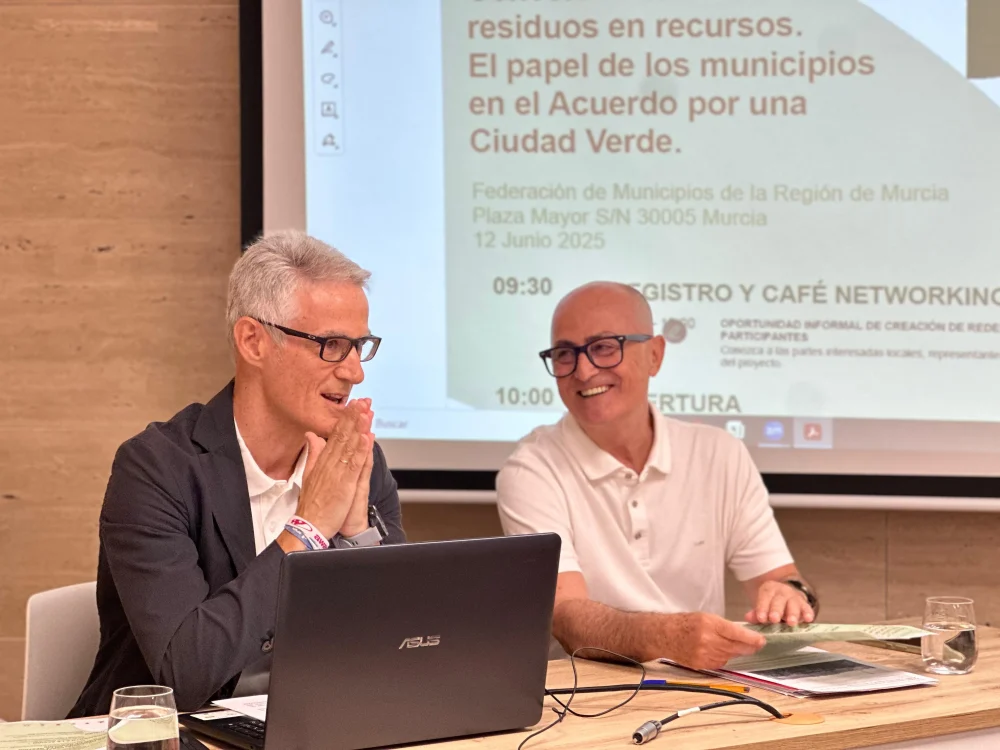
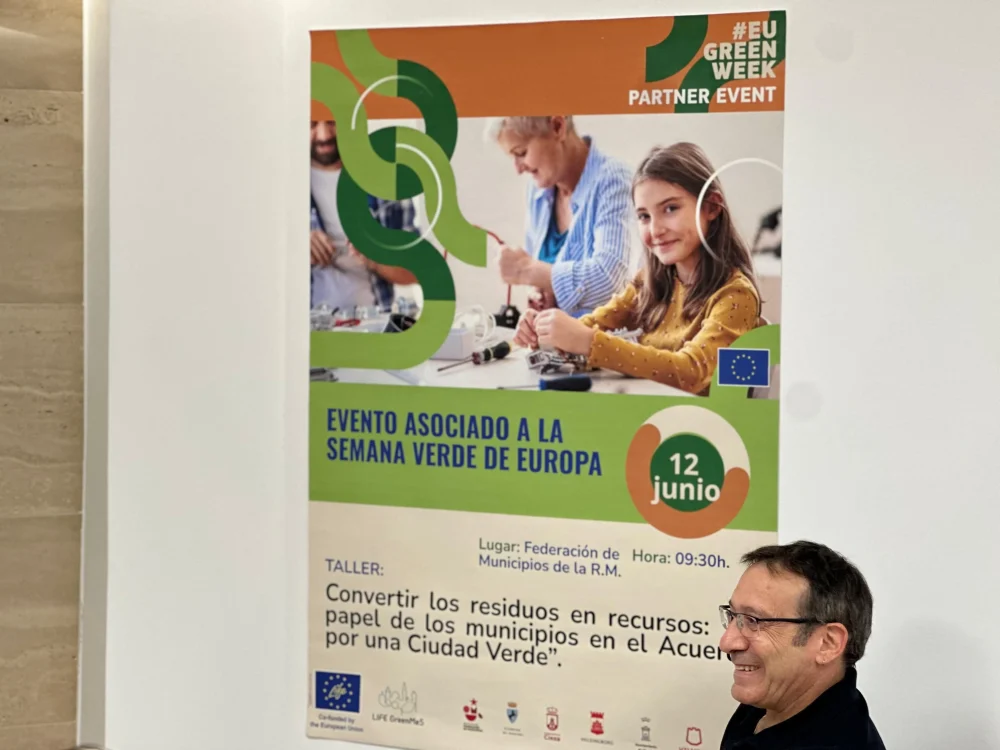
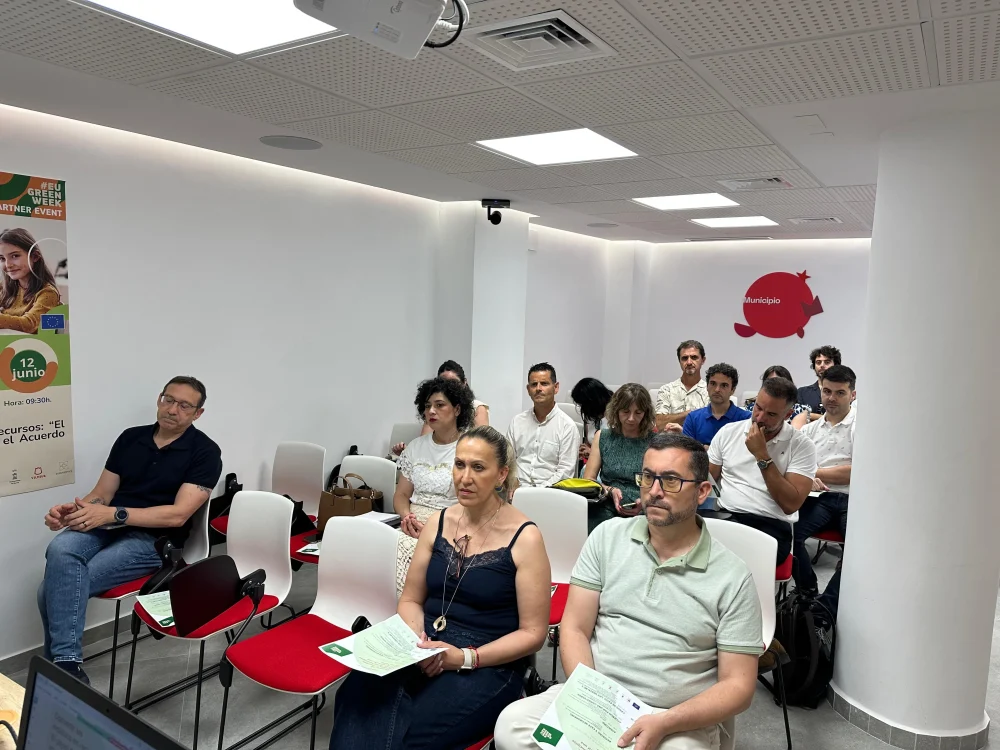
Murcia, June 12, 2025. The Federation of Municipalities of the Region of Murcia (FMRM) held the event associated with EU Green Week 2025, "Turning Waste into Resources: The Role of Municipalities in the Green City Agreement," a day focused on accelerating the local circular economy and meeting European waste management targets. The session took place at the FMRM headquarters and brought together municipal officials, technical experts, and partners from the LIFE GreenMe5 project.

The opening remarks were given by Antonio Moreno, Secretary General of the FMRM, and Isabel Costa, Head of the Regional Government's Environmental Planning and Assessment Service, who emphasized the role of local governments as a lever for the circular transition.

As part of EU Green Week 2025, dedicated to "circular solutions for a competitive Europe," the event focused on the European focus on the "three Cs": Clean, Competitive & Circular.

Europe looks to cities

Alfonso Alcolea, from the European Commission's Directorate-General for the Environment, presented the Green City Accord, a community initiative that supports cities in strengthening their environmental performance in five key areas: waste, air, water, noise, and biodiversity.

Within LIFE GreenMe5, the FMRM leads the support and technical support for municipalities in the region to promote this framework.

Success stories and good practices

Manuel Valls (Murcia City Council) shared progress on the municipal circular economy, and Alessandro Forzoni (Arezzo Municipality, Italy) detailed the transformation of the waste service since 2019: an increase in separate collection to 65%, asbestos protocols, and a pilot "ecopark" with fare discounts.

In the section on good practices in the Region of Murcia, María Huertas (EuroVértice) presented actions from the LIFE Bauhausing project in Cartagena and Blanca, and Alberto Hernández (LIMUSA–Lorca City Council) presented the La Hoya pilot project: reorganizing collection points, deploying brown containers, and closing the gray containers with a controlled card, to improve separation at source and service efficiency.

Municipalities present and technical dialogue

The event brought together political and technical representatives from Murcia, Lorca, Cieza, Cartagena, San Javier, San Pedro del Pinatar, Mazarrón, Molina de Segura, Águilas, Las Torres de Cotillas, Fortuna, Jumilla, La Unión, among others, as well as Ecoembes and staff from the Autonomous Community.

After the panel and roundtable, Miguel Ángel Piñera (Cieza City Council) issued a call to action: he encouraged new municipalities to join the Green City Accord and to structure dashboards with environmental indicators for decision-making.

Conclusions and next steps

Prepare the separate collection of biowaste and review implementation deadlines and justification of funds.

Municipal asbestos censuses and regional support with a fiber cement roof viewer.

Strengthen citizen awareness, enforce ordinances, and evaluate control technologies at hotspots.

Extend the shredding of prunings for reuse in gardens and parks.

Promote dashboards and indicators to achieve the goal of reducing the remaining fraction to 10%.

European context

EU Green Week 2025 has emphasized circularity as a driver of competitiveness, waste reduction, and innovation, a focus of the actions of the Region's municipalities through LIFE GreenMe5.

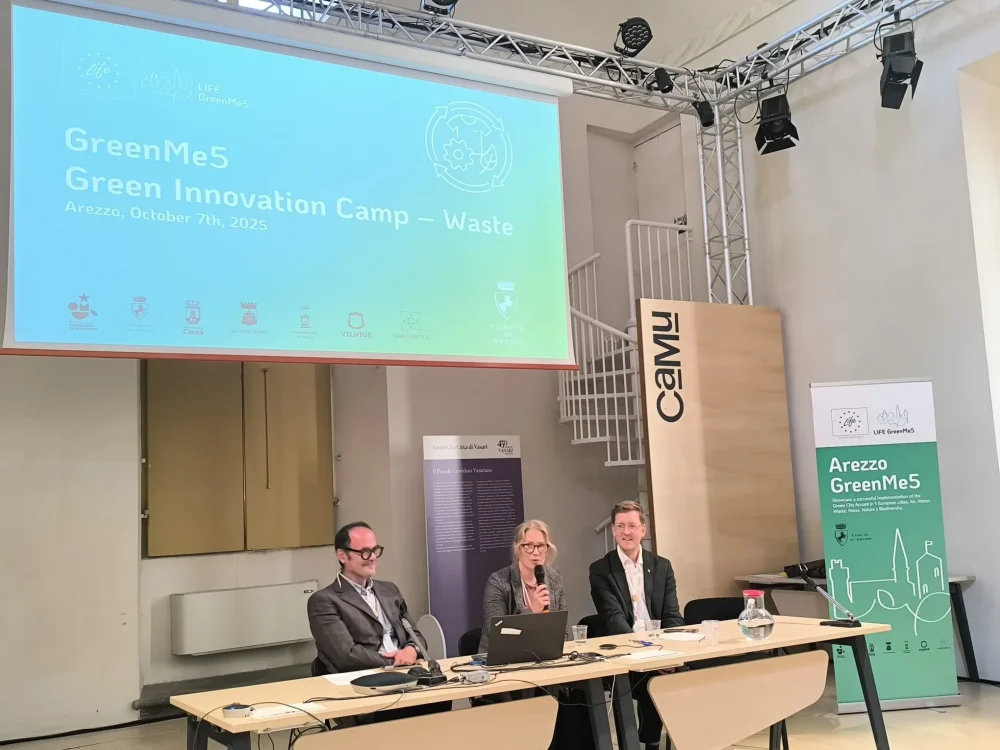
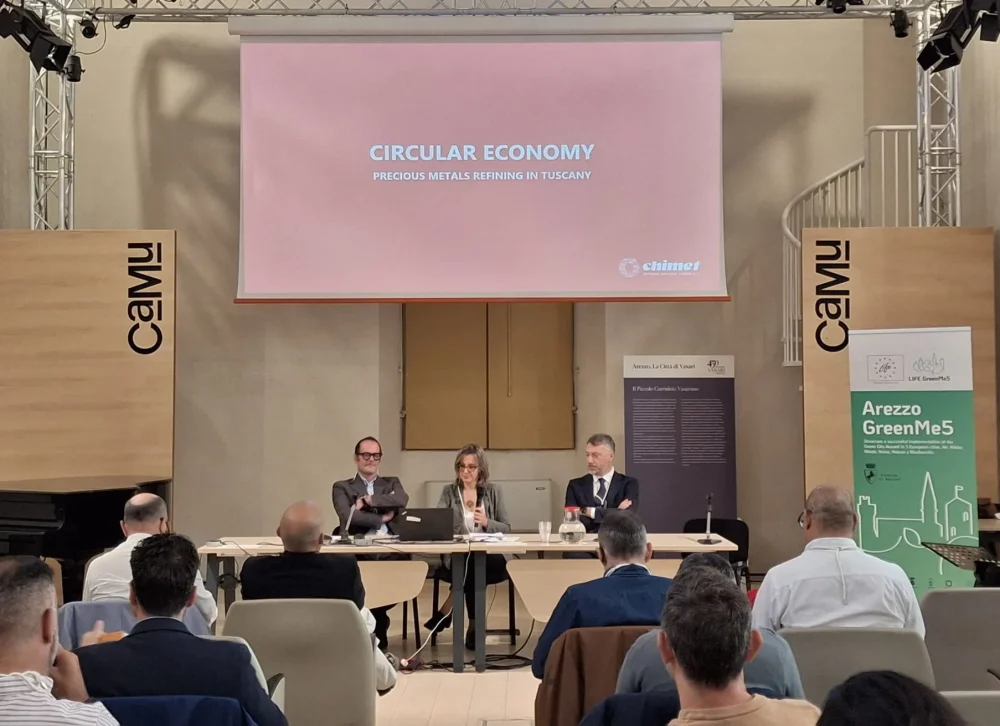
The Federation of Municipalities of the Region of Murcia (FMRM) participated today in the Green Innovation Camp – Waste , an international workshop of the European LIFE GreenMe5 project and aligned with the Green City Accord , focused on innovation and waste management.

The Murcia delegation was accompanied by Isabel Costa and Fernando González Roca , from the Autonomous Community of the Region of Murcia (CARM) , and by Alberto Hernández , from LIMUSA – Lorca , along with partners from the LIFE GreenMe5 consortium.

The Green Innovation Camp has brought together institutional representatives, companies and municipal services to present innovative strategies and technologies , promote circular economy practices , and exchange best practices at the regional, national and European levels , strengthening public-private cooperation around waste reduction and sustainability.

The program included:

  • Institutional opening and update on the Green City Accord and the objectives of LIFE GreenMe5.
  • Tables on reorganization and transformation of waste management services in the territory.
  • Technical sessions on recovery of precious metals y valorization of the organic fraction.
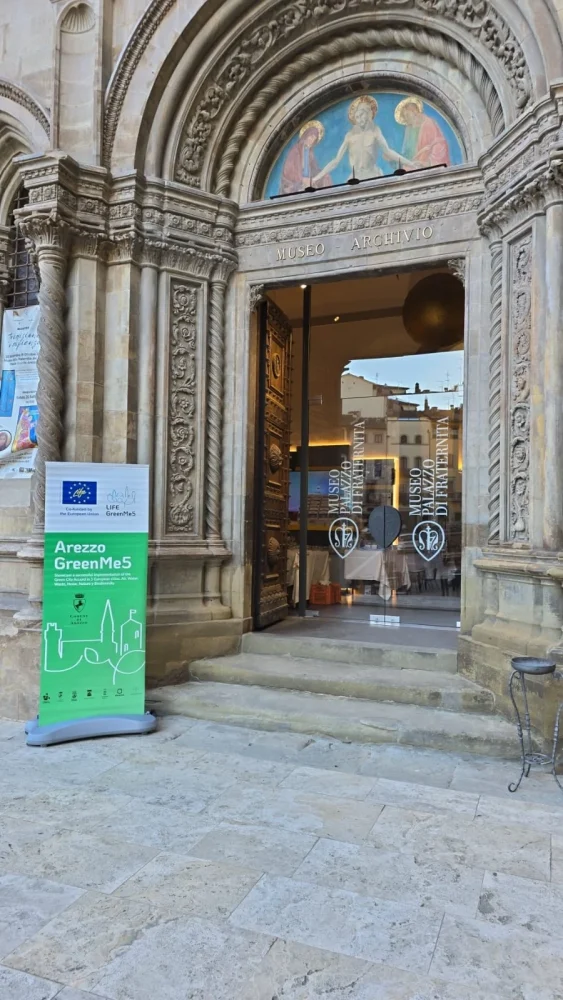
  • Study visit to the plant total recovery of urban waste in San Zeno (Arezzo) and your cutting-edge technology hub.

Among the participating entities are, among others, the Municipality of Arezzo (Environment, Climate and Civil Protection Service), ATO Toscana Sud , SEI Toscana , AISA Impianti , and leading companies such as Chimet SpA and IREN Ambiente SpA , as well as cities such as Florence , Vilnius and Helsingborg.

About LIFE GreenMe5
LIFE GreenMe5 promotes the transition toward cleaner, greener, and healthier urban models through concrete actions in the circular economy, efficient waste management, and inter-municipal cooperation.

The team of the European Union-funded LIFE GreenMe5 project, led by the Federation of Municipalities of the Region of Murcia, has met in the Swedish city of Helsingborg for the Green Innovation Camp initiative, belonging to the project focused on the Green Agreement of Cities, and on its lines of action, water, air, noise, waste, nature and biodiversity.

This meeting focused on urban noise, one of the causes of the greatest loss of quality of life and health problems in European cities.

In addition to the project's five partner cities, the event featured leading Swedish experts in the field, presenting firsthand pioneering experiences and innovative solutions for mitigating noise pollution in urban environments. Some of these solutions are nature-based, such as green barriers, noise-absorbing asphalt pavements, and urban planning. Furthermore, among the actions contemplated by LIFE GreenMe5, citizen awareness campaigns will be carried out, and measurement technologies using smart sensors and real-time data analysis were presented as case studies with striking results in improving citizens' quality of life.

Active participation in this type of European project allows the partners—Murcia, Cieza, Helsingborg, Vilnius, and Arezzo—to maintain direct contact with the most cutting-edge cities, the best experts, and the solutions needed in each of the five pillars of the Green City Accord, facilitating the incorporation of innovative techniques into local urban management.

Participating cities thus reinforce their commitment to urban sustainability, aligning themselves with European guidelines and adapting international best practices to the reality of their municipalities to improve citizens' quality of life.