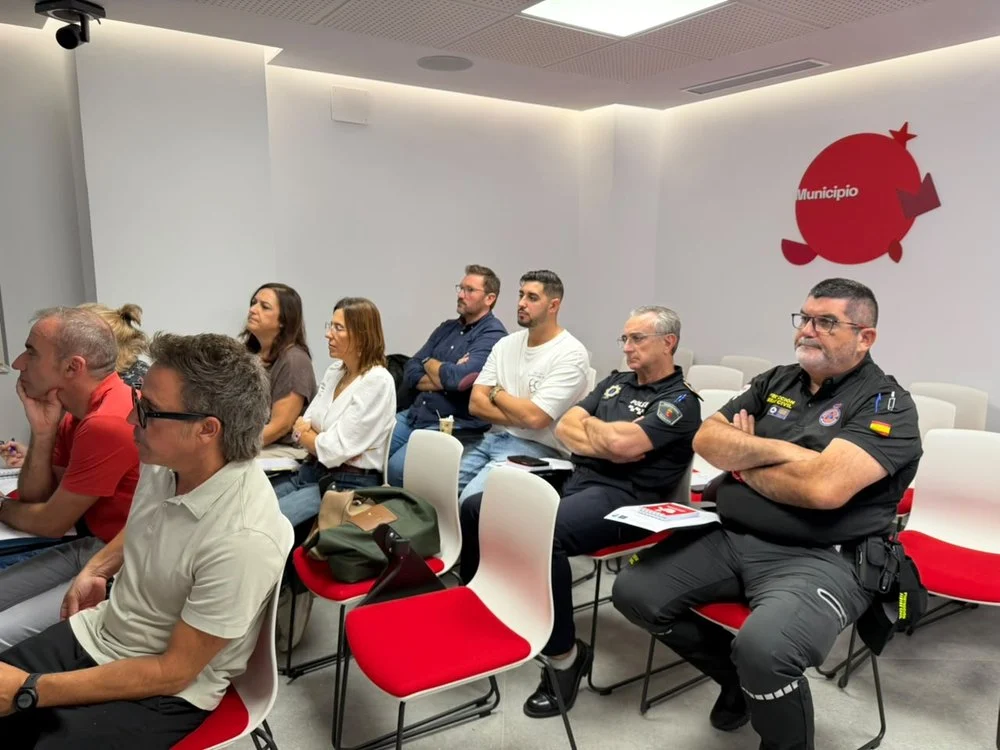
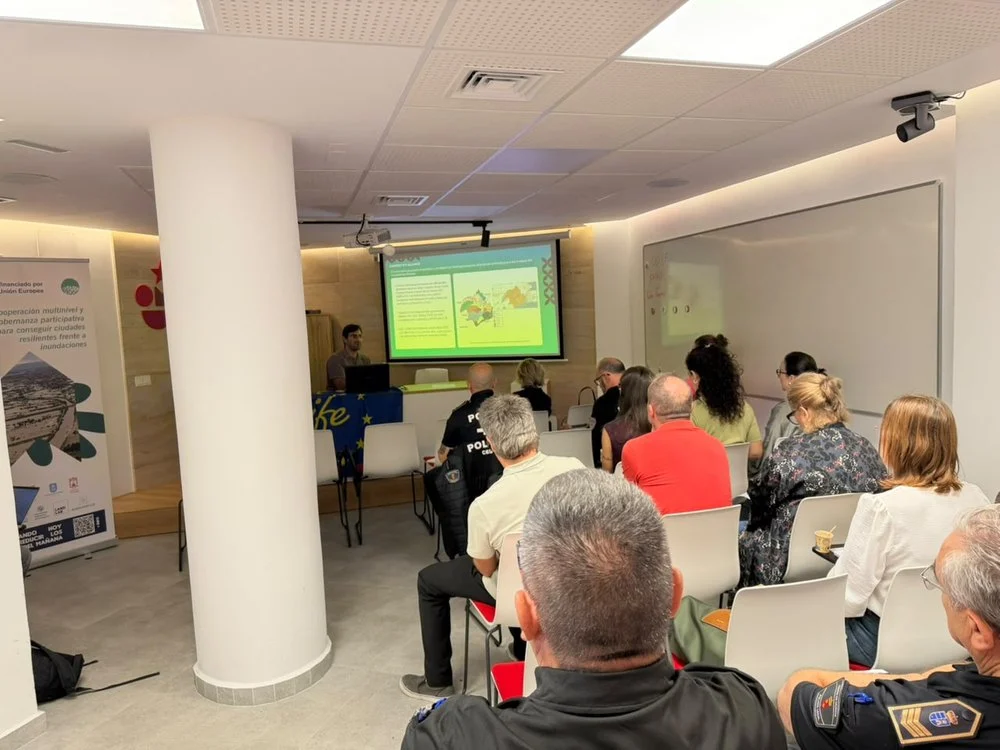
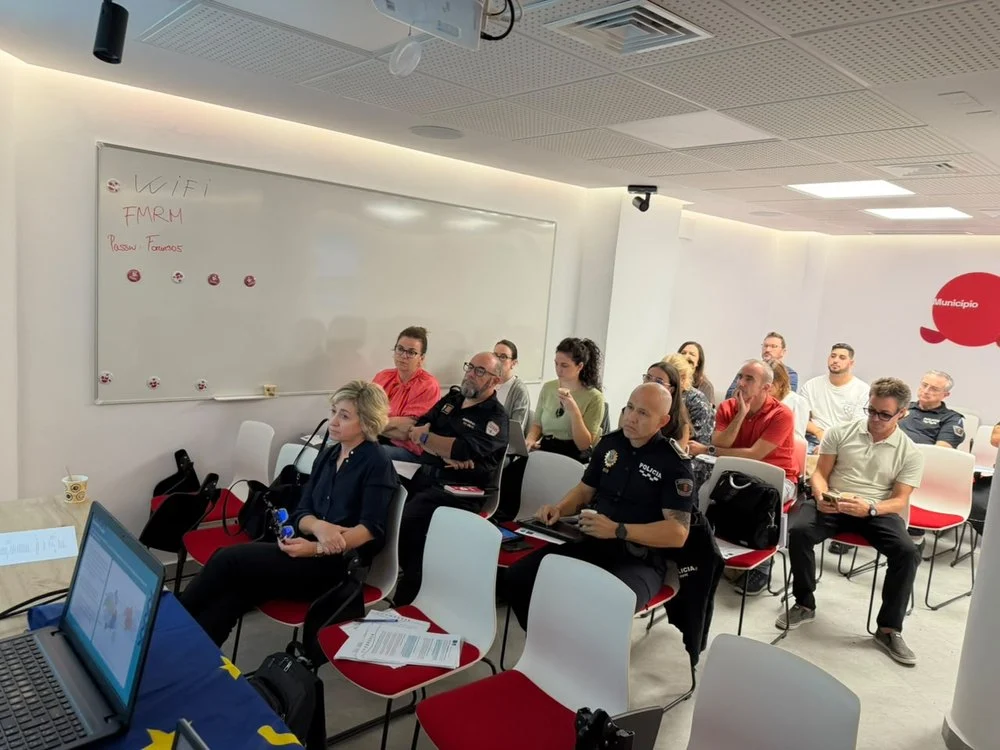
The partners of the European project meet at the Federation of Municipalities of the Region of Murcia to assess progress and coordinate upcoming actions aimed at improving flood prevention in the municipalities of the Segura basin.
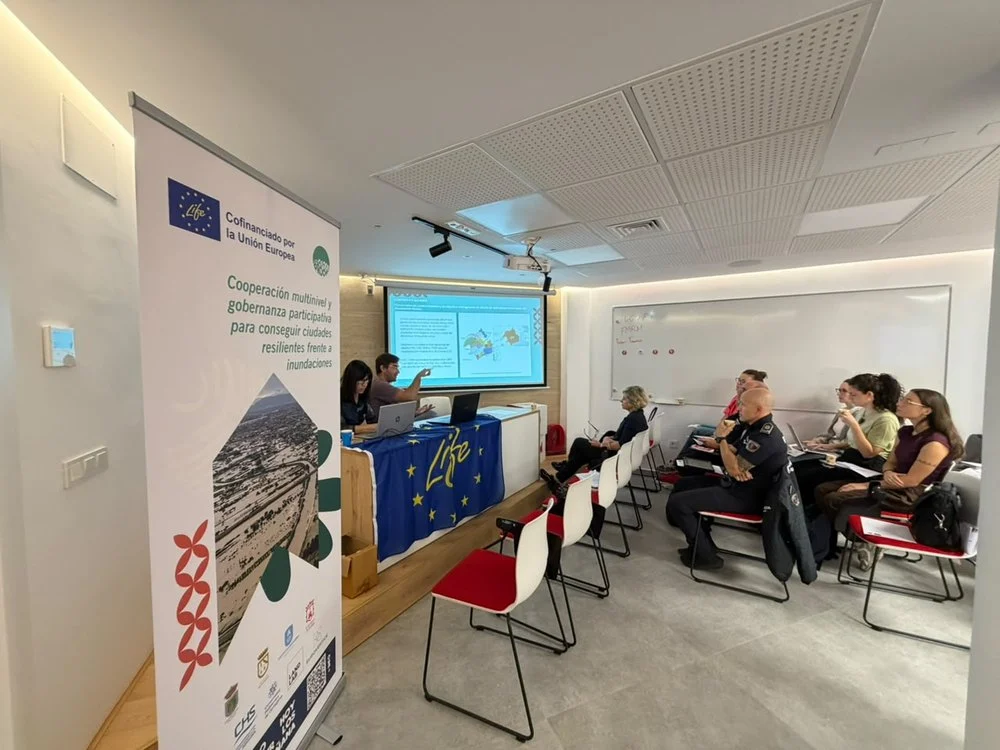
The Federation of Municipalities of the Region of Murcia (FMRM) hosted a new technical coordination meeting on October 29 for the European LIFE FLOODPROOF project , in which the partners analyzed the progress made and defined the next steps to improve the capacity of the municipalities to face the risk of flooding.
During the meeting, important advances were discussed in the development of risk maps, the identification of urban spaces where sustainable solutions can be applied, the development of early warning systems, and the involvement of citizens in prevention.
New maps to understand and prevent flood risk
One of the main advances corresponds to the work of the Polytechnic University of Cartagena (UPCT) , which is developing high-resolution hydrological and hydraulic models to identify the areas with the greatest risk of flooding.
These studies will provide more accurate information on the behavior of water during episodes of heavy rainfall and will help local councils make decisions to protect the population and plan future actions.
A first version of the maps is expected to be available before the end of 2026.
Towards more resilient municipalities: the concept of the "sponge city"
The project is also making progress in identifying spaces where nature-based solutions and sustainable urban drainage systems can be incorporated , capable of retaining, infiltrating or better managing rainwater.
Under the concept of the sponge city , the aim is to adapt public and private spaces to reduce water accumulation and promote safer, more sustainable urban environments that are better prepared for climate change.
The work, carried out with the participation of LANDLAB, UPCT and the local councils, will allow the identification of the most suitable areas for future interventions.
Early warning systems and greater citizen participation
Another key focus is the development of four early warning systems that will help improve municipal anticipation and response to episodes of heavy rainfall.
In parallel, the project has completed four local governance meetings and has started citizen oversight groups, with the first meeting held in Las Torres de Cotillas.
These spaces seek to involve residents, associations and local agents in identifying needs, preventing risk and preparing action measures.
Research is also underway to strengthen local weather observation and promote educational and citizen science activities to improve knowledge of the risks associated with rainfall.
Municipal cooperation for a better prepared Region of Murcia
The meeting also made progress in coordinating the pilot projects planned in Ceutí, Lorquí, Alguazas and Las Torres de Cotillas , as well as in preparing local action plans and upcoming training and awareness activities.
LIFE FLOODPROOF, funded by the European Union's LIFE program, brings together public administrations, universities and specialized entities with a common goal: to improve flood risk management through scientific knowledge, institutional cooperation and citizen participation.
The FMRM participates in the project by especially promoting communication, dissemination and awareness actions, bringing the results and tools developed closer to the municipalities and the citizens.